
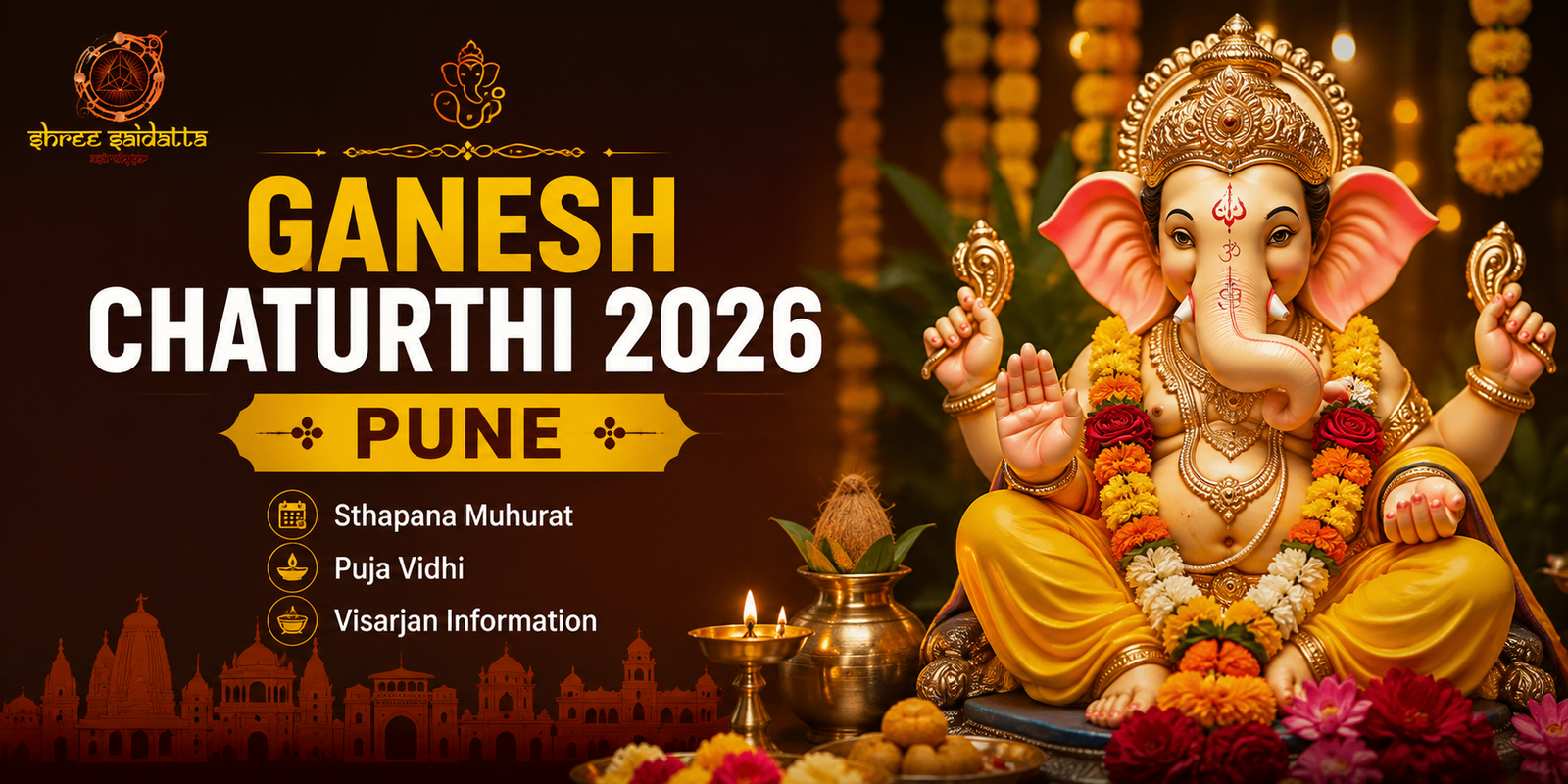
Ganesh Chaturthi 2026 falls on Monday, September 14, and Pune gets ready to welcome Bappa home with full devotion. The Chaturthi Tithi begins at 7:06 AM on September 14 and continues until 7:44 AM the next morning, giving devotees a wide window to plan their Ganpati Sthapana. Whether you’re bringing home a small clay murti for one and a half days or celebrating the full ten-day Ganeshotsav, getting the date and muhurat right is the first step toward an auspicious start.
Ganesh Chaturthi 2026 Date and Chaturthi Tithi
Ganesh Chaturthi falls on the Shukla Paksha Chaturthi of the Bhadrapada month, and in 2026 this lands on Monday, September 14. The tithi itself begins early morning at 7:06 AM on the 14th and runs until 7:44 AM on September 15, which is why some families choose to perform Sthapana in the morning while others wait for the more favoured midday window.
Sthapana Muhurat in Pune
The most auspicious time for Ganpati Sthapana in 2026 is the Madhyahna Muhurat, from 11:02 AM to 1:31 PM. This midday period is considered the most powerful moment for installing the idol, since Lord Ganesha is believed to have been born during this time. If you’re unable to perform the puja during this window, Sthapana can still be done anytime within the Chaturthi Tithi, right up to 7:44 AM on September 15 — the Pradosh Kaal (evening) is an acceptable backup if the midday slot doesn’t work for your household.
Ganpati Puja Vidhi — Step by Step
A day before Chaturthi, clean and decorate the puja space with rangoli, flowers, and torans at the entrance. On the day itself, bring the idol home before the Sthapana Muhurat, welcome it with an aarti at the doorstep, and place it on a red cloth at the altar. Prana Pratishtha — invoking life into the idol — is done by chanting mantras and offering akshata (rice). This is followed by the shodashopachara puja, the traditional sixteen-step worship that includes bathing the idol, offering flowers, durva grass, modaks, and performing the aarti.
Many families in Pune also recite the Ganesh Atharvashirsha Path during the puja, and it’s genuinely worth making time for. This Vedic hymn is considered essential for invoking Ganesha’s full blessings — reciting it during Sthapana and through the ten days of worship is believed to remove obstacles and bring clarity and stability to the home. If you’re new to it, even reading it once daily during the aarti is a meaningful start.
Where you place the idol matters too. A cluttered or poorly-placed altar can work against the very energy you’re trying to invite in. If you’re unsure whether your puja corner is positioned correctly, our Vastu Shastra consultation can help you set up the space the right way — in fact, bringing Ganpati home each year is itself considered one of the simplest ways to correct minor Vastu dosha in a house, since his presence is said to restore balance to disturbed energy zones. Pandit Pravin Shastri is regarded as one of the best Vastu consultants in Pune for exactly this kind of home energy correction.
Puja Samagri Checklist
Keep these ready before Sthapana: a clay or eco-friendly Ganesha idol, red cloth, akshata, durva grass, red flowers and hibiscus, modaks or your family’s traditional naivedya, incense sticks, diya and ghee, coconut, and a small bell for the aarti. Modaks hold special significance here — they’re considered Ganesha’s favourite offering, and preparing them fresh each day of the festival is seen as an act of devotion in itself, not just a ritual formality.
Ganesh Chaturthi in Pune: A City-Wide Celebration
Pune’s Ganeshotsav is among the most significant in Maharashtra, with its roots going back to the public celebrations started in the city over a century ago. Localities across Pune — from the historic Manache Ganpati mandals to smaller housing society pandals — decorate elaborate shrines that draw devotees through all ten days. If you’re setting up a home Ganpati this year, visiting even one or two of these mandals during the festival is a lovely way to experience the collective energy of the celebration alongside your own home puja.
The Moon-Avoidance Rule on Chaturthi
On Ganesh Chaturthi, viewing the moon is considered inauspicious and linked to Mithya Dosha — a curse of false accusation, tracing back to the story of Lord Ganesha and Chandra. In 2026, the moon-avoidance window falls between 9:01 AM and 8:09 PM on September 14. If you happen to see the moon during this time, reciting the Syamantaka Mani shloka is the traditional remedy, so there’s no need to worry unnecessarily.
This rule ties back to the story of Lord Krishna, who was falsely accused of theft after glancing at the moon on this very tithi. It was only after Sage Narada explained the curse behind it that the truth came out — which is why the katha itself is read aloud in many homes on Chaturthi, alongside the puja, as a way of guarding against the same misfortune.
Daily Aarti and Negative Energy
One of the most overlooked benefits of keeping Ganpati at home isn’t just festive — it’s energetic. Performing the morning and evening aarti with sincerity through the days he stays with you is believed to steadily clear negative energy from the household, restoring a sense of calm and positivity to the space. If you’ve noticed unexplained tension, restlessness, or heaviness at home, it’s worth reading up on the common signs of negative energy in your home — many of these patterns ease naturally once daily puja and aarti become part of the household rhythm during Ganeshotsav.
Ganeshotsav: 10 Days and Visarjan
The festival traditionally runs for ten days, concluding with Ganesh Visarjan on Anant Chaturdashi, Friday, September 25, 2026. This is when the idol is immersed in water, symbolising the cycle of creation and dissolution, and devotees bid farewell with the chant “Ganpati Bappa Morya, Pudhchya Varshi Laukar Ya” — inviting him to return again the following year. Pune’s own Ganesh Visarjan procession is among the most significant in the state, drawing large processions from the city’s major mandals.
Why Ganesh Chaturthi Matters Beyond the Ritual
In Vedic tradition, Ganesha is worshipped first before any new beginning — a wedding, a business launch, a house-warming — precisely because he is seen as the remover of obstacles. Timing his puja correctly, and pairing it with the right intent, is often considered a good moment to also reflect on bigger decisions coming up in your year, whether that’s a career move, a property purchase, or a family occasion. If you’d like a personalised reading on what this Ganesh Chaturthi means for your year ahead, you can get in touch with us for a one-on-one consultation with Pandit Pravin Shastri.
Frequently Asked Questions
When is Ganesh Chaturthi in 2026?
Ganesh Chaturthi 2026 falls on Monday, September 14.
What is the Sthapana Muhurat for Ganesh Chaturthi 2026?
The Madhyahna Muhurat is from 11:02 AM to 1:31 PM, considered the most auspicious time for idol installation.
When is Ganesh Visarjan in 2026?
Ganesh Visarjan falls on Anant Chaturdashi, Friday, September 25, 2026, marking the end of the ten-day Ganeshotsav.
Is Ganesh Chaturthi a public holiday?
Yes, it’s a declared holiday in Maharashtra, Karnataka, Goa, and Andhra Pradesh, though not observed nationwide.
Can I keep Ganpati at home for just 1.5 or 5 days instead of the full 10?
Yes. Families choose different durations — 1.5, 3, 5, 7, or the full 10 days — based on personal or family tradition. What matters most is sincere daily aarti and puja for however long the idol stays home.