Category: Uncategorized

  • Home
  • Category: Uncategorized

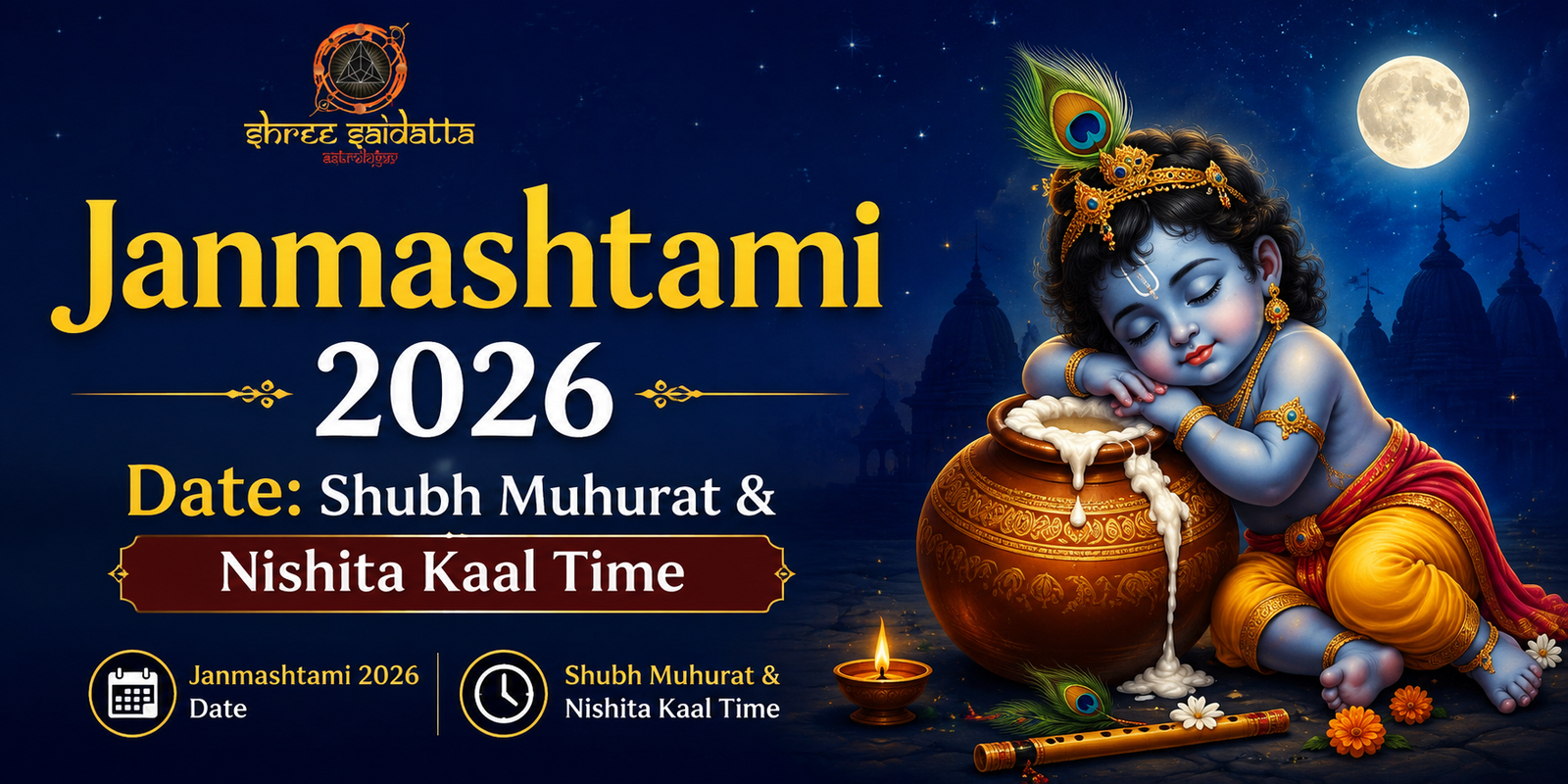
Janmashtami 2026 Date: Shubh Muhurat & Nishita Kaal Time

Every year, as the monsoon eases and homes across Maharashtra fill with the fragrance of tulsi and fresh flowers, devotees ask the same question: what is the Janmashtami 2026 date, and when exactly should the midnight puja be performed? At Shree Sai Datta, we believe the answer isn’t just a date on a calendar — it’s a moment governed by precise astrological timing, observed for over five thousand years.

This guide gives you the confirmed date for this year, the exact Nishita Kaal muhurat, and the deeper astrological significance behind why this particular night is considered so powerful.


Janmashtami 2026 Date: Friday, September 4


The Janmashtami 2026 date falls on Friday, September 4, according to the Smarta tradition followed by most households across India, including Maharashtra. This is the date on which Ashtami Tithi (the eighth day of Krishna Paksha) is present during Nishita Kaal, the sacred midnight hour.

Devotees who follow the Vaishnava and ISKCON tradition, which gives weight to the union of Ashtami with Rohini Nakshatra at sunrise, observe Krishna Janmashtami on Saturday, September 5. Both dates are correct within their respective traditions — there is no single “wrong” answer here, only a difference in which classical rule your family or sampradaya follows. If your household has no fixed custom, September 4 is the widely accepted default.

Maharashtra follows the amanta calendar, which counts each month from one new moon to the next. Under this system, this Krishna Paksha Ashtami lands inside Shravan, so it’s called Shravan Vadya Ashtami here. North India uses the purnimanta calendar instead, where the same day falls in Bhadrapada — so it’s really just two names for the exact same date.

Interestingly, this timing means the festival arrives just as the Sawan season draws to a close in the purnimanta calendar too — a fitting transition from a month devoted to Lord Shiva into the celebration of Lord Krishna’s birth. If you’re tracking the full festival calendar for this Sawan season, our Sawan 2026 guide covers the important dates and their significance in detail.


Janmashtami Shubh Muhurat & Nishita Kaal Puja Time


The single most important timing to know this year is the Nishita Kaal puja muhurat — the exact midnight window in which Lord Krishna is believed to have taken birth.

Nishita Kaal 2026: Approximately 11:56 PM on September 4 to 12:41 AM on September 5 (timings for Pune and Maharashtra; always cross-check with your local Panchang, as the window can shift by a few minutes depending on your exact location).

This roughly 45-minute window is considered the most spiritually potent moment of the entire festival. In Vedic astrology, midnight is not simply “late at night” — it is treated as a threshold moment, when the veil between the material and the divine is believed to be at its thinnest. Performing abhishek of the Bal Gopal idol, offering makhan-mishri, and reciting the Krishna Ashtottara or Vishnu Sahasranama during this exact Nishita Kaal window is considered far more powerful astrologically than performing the same rituals at any other hour of the day.

For those who want to be certain their puja timing is precisely aligned to their own birth details and location — since planetary influences shift subtly by birth time and place — a personalized muhurat reading can offer more accuracy than a generic online timing.

The Astrological Significance of Rohini Nakshatra


What makes Krishna Janmashtami 2026 particularly significant astrologically is the presence of Rohini Nakshatra at the time of Krishna’s birth. Ruled by the Moon, Rohini is associated with beauty, fertility, material abundance, and creative energy — qualities closely tied to Krishna’s own mythology as a nurturer and beloved figure among the gopis of Vrindavan.

The rare combination of Ashtami Tithi falling together with Rohini Nakshatra is what Vaishnava tradition considers the truest marker of Krishna’s actual birth moment, which is why some sampradayas shift their observance by a day to align with this yog. Understanding your own birth nakshatra, and how it shapes your temperament in the same way Rohini shaped Krishna’s, is one of the most revealing parts of a detailed horoscope reading.

There’s another, lesser-known astrological connection devotees often ask us about — the auspicious symbols said to appear on Lord Krishna’s feet. Classical texts describe his soles as bearing marks of the shankh (conch), chakra (discus), dhwaja (flag), and kamal (lotus) — the same symbols palmistry, or hast rekha shastra, studies on human palms and soles as indicators of a powerful, fortunate destiny. At Shree Sai Datta, palmistry readings often draw on this very tradition — examining these same auspicious lines and mounts to understand the deeper potential written into a person’s hand. If you’re curious what your own palm reveals, our palmistry consultation explores these ancient sign systems in detail.


Janmashtami Puja Vidhi: A Quick Overview


Here is a condensed overview of the core puja steps followed on the day:

  1. Wake early and bathe the Krishna idol using Ganga jal, then dress it in new clothes and ornaments.
  2. Decorate a swing (jhula) for Bal Gopal, along with a clean puja chowki draped in red cloth.
  3. Offer bhog — milk, fruits, kheer, and traditional sweets — placed on a clean white cloth beside the idol. Larger households and temples often prepare Chhappan Bhog, a ceremonial spread of 56 distinct dishes offered after the midnight puja, symbolising Krishna being fed continuously through the day as a young cowherd.
  4. Observe the day-long fast, breaking it only after the Nishita Kaal puja at midnight.
  5. Perform the midnight abhishek during the Nishita Kaal window, bathing the idol in milk, ghee, honey, and Ganga jal while chanting Krishna mantras.
  6. Conduct aarti, distribute prasad, and formally break the fast (Parana) the next morning once Ashtami Tithi has ended.


Dahi Handi: Maharashtra’s Signature Celebration


While the Janmashtami 2026 date itself is marked by fasting and midnight prayer, the following day belongs to a tradition Maharashtra celebrates like nowhere else — Dahi Handi. Teams of young men known as Govindas form towering human pyramids in streets and public squares across Pune, Mumbai, and Thane, competing to reach and break an earthen pot (handi) filled with curd and butter, suspended high overhead.

The custom reenacts young Krishna’s mischievous habit of raiding neighbours’ homes with his friends for freshly churned makhan — playful exploits that earned him the affectionate name Makhan Chor, the butter thief. In Vedic thought, this isn’t seen as simple mischief; it reflects Krishna’s role as a joyful, boundary-breaking presence who reminds devotees that devotion doesn’t always need to be solemn. For many Pune households, Dahi Handi is as much a part of the festival as the midnight puja itself, and it’s worth planning your Janmashtami 2026 celebrations around both days if your family observes the full two-day tradition.


Janmashtami Fasting Rules


Most devotees fast through the day until the midnight puja is complete, abstaining from grains and certain foods. Those with health conditions can follow a modified phalahar vrat with milk, fruits, and vrat-friendly flours instead. What matters most in Vedic tradition is sincerity of devotion (shraddha), not the physical severity of the fast.


Why Krishna Janmashtami Still Matters Today


Beyond the rituals and the precise Janmashtami 2026 date, this festival carries a message that has stayed relevant for over five thousand years — the triumph of dharma over adharma, and the belief that divine protection arrives whenever it is needed most. Krishna’s birth in a Mathura prison cell — where his parents Devaki and Vasudeva were held captive after a prophecy foretold that Devaki’s eighth son would end the tyrant King Kamsa’s rule — and his subsequent journey to safety across a flooded Yamuna, remains one of the most retold stories in Indian spiritual tradition precisely because it speaks to resilience and faith even in the darkest circumstances.

Whether you’re planning your Nishita Kaal puja timing, curious about your own Rohini Nakshatra placement, or want a personalised horoscope reading to understand what this festive season holds for you, Shree Sai Datta is here to guide you. Get in touch with us for a detailed consultation ahead of this Janmashtami.

Frequently Asked Questions

What is the Janmashtami 2026 date?

Krishna Janmashtami 2026 falls on Friday, September 4 (Smarta tradition) and Saturday, September 5 (Vaishnava/ISKCON tradition)

What is the Nishita Kaal puja muhurat for 2026?

Approximately 11:56 PM on September 4 to 12:41 AM on September 5, though exact timings may vary slightly by location.

Why is Janmashtami called Shravan Vadya Ashtami in Maharashtra?

Because Maharashtra follows the amanta lunar calendar, where this Krishna Paksha Ashtami falls within Shravan month rather than Bhadrapada, as it’s named in North India’s purnimanta system.

What is the significance of Rohini Nakshatra on Janmashtami?

Rohini Nakshatra was present at the time of Krishna’s birth, and its combination with Ashtami Tithi is considered the most astrologically significant marker of his true birth moment.

When is Dahi Handi 2026?

Dahi Handi is celebrated the day after Janmashtami, making it fall on September 5, 2026, with Maharashtra hosting some of the largest celebrations in the country.
Read More

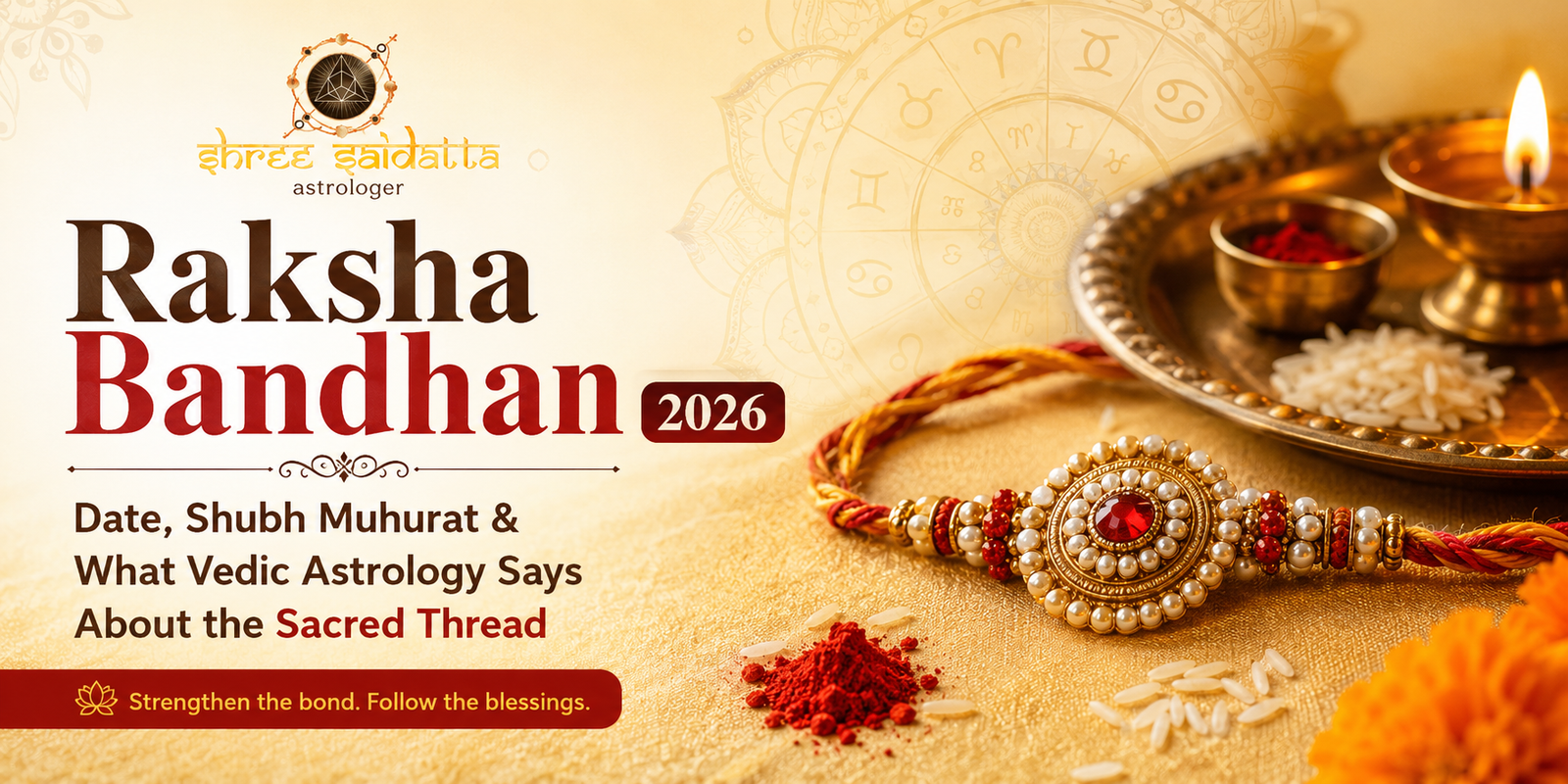
Raksha Bandhan 2026: Date, Shubh Muhurat & What Vedic Astrology Says About the Sacred Thread

Every year, as Shravan month arrives and the monsoon settles over, homes start filling up with a familiar excitement. Sisters go shopping for the perfect rakhi, brothers wait (half-teasingly) to see what gift comes their way, and somewhere in between the sweets and the selfies, a much older ritual quietly repeats itself — one that Vedic astrology has always taken rather seriously.

Raksha Bandhan is not just a festival of thread and affection. In Hindu astrology, the day carries real planetary weight, and the timing of the rakhi ceremony is treated as more than a formality. If you have ever wondered why your family insists on tying rakhi before a certain hour, or why elders keep mentioning “Bhadra,” this blog will walk you through both — the correct Raksha Bandhan date, the shubh muhurat for 2026, and the deeper astrological reasoning behind it.

This year’s celebration also falls within Shravan month, a period already packed with festivals and fasting traditions — if you’re tracking the full month’s calendar, our Sawan 2026 guide covers every important date and vrat alongside Raksha Bandhan.


When Is Raksha Bandhan in 2026?


Raksha Bandhan 2026 falls on Friday, 28th August 2026, coinciding with Shravana Purnima — the full moon day of the Shravan month in the Hindu lunisolar calendar. Here is the exact Rakhi muhurat and Raksha Bandhan shubh muhurat for this year, based on the Pune panchang.

Key Panchang details for 2026:

  • Purnima Tithi begins: 9:08 AM, 27th August 2026
  • Purnima Tithi ends: 9:48 AM, 28th August 2026
  • Shubh Muhurat for tying Rakhi: 5:57 AM to 9:48 AM
  • Bhadra Kaal: Ends before sunrise — no conflict this year
  • Rahu Kaal (to avoid): 10:46 AM to 12:22 PM

This is genuinely good news for families this year. In many years, Bhadra Kaal eats into a large part of the morning, forcing households to wait until afternoon. In 2026, since Bhadra concludes before sunrise itself, the entire morning window is clean and auspicious — you can perform the ceremony any time between 5:57 AM and 9:48 AM without worrying about inauspicious timing.

If the morning gets missed for any reason, Aparahna (early afternoon, roughly after 1:30 PM) is considered the next best Rakhi shubh time — just steer clear of Rahu Kaal between 10:46 AM and 12:22 PM.


Why Timing Actually Matters in Astrology


A common question we hear during consultations at Shree Sai Datta is — does it really matter when you tie the rakhi, as long as it happens on the right day?

In Vedic astrology, the answer is yes. Bhadra Kaal is governed by an energy associated with disruption and discord — traditionally linked to the sister of Shani Dev. Rituals performed during this period are believed to carry the risk of misunderstandings or friction between siblings later in the year, which is exactly the opposite of what Raksha Bandhan is meant to invoke. That’s why priests and astrologers always emphasise checking the muhurat before beginning the ceremony, rather than tying rakhi at whatever time is convenient.

The full moon itself also plays a role. Purnima is associated with heightened emotional energy and the Moon’s influence on relationships, memory, and the mind. Performing an emotionally significant ritual on this day is believed to amplify its effect — which is part of why Raksha Bandhan was placed on Shravana Purnima in the first place, rather than any random date.


The Deeper Meaning Behind the Thread


Long before it became a day of sweets and gift envelopes, Raksha Bandhan carried a far more solemn meaning. The word itself comes from two Sanskrit roots — “Raksha,” meaning protection, and “Bandhan,” meaning a bond or tie. Together, they describe a vow, not just a decoration for the wrist.

In earlier times, a protective thread of this kind wasn’t limited to brothers and sisters at all. It was tied by priests onto the wrists of kings before battle, and by wives onto husbands as a spiritual shield. The idea was always the same — those with strength owe protection to those they love, and the thread is a reminder of that responsibility. Over centuries, this evolved into the festival we now associate primarily with siblings, though the spiritual undertone of protection and duty never really left it.

This is also why many families still treat rakhi as more than a gesture — the sister’s prayer for her brother’s wellbeing, and the brother’s promise in return, are both considered energetically significant, not merely symbolic.


History of Raksha Bandhan: When Was It First Celebrated?


There’s no single date in history that marks the “beginning” of Raksha Bandhan — its roots go back to Puranic times, long before it became a sibling festival. One of the earliest references appears in the Bhavishya Purana, where Devi Sachi, wife of Indra Dev, ties a protective thread around his wrist before he leaves for battle against the Asuras. The Devas were struggling at the time, and on the advice of Guru Brihaspati, Sachi tied this sacred thread on Shravan Purnima as a form of divine protection. Indra went on to win the battle, and this moment is often cited as the earliest seed of what we now know as Rakhi — not a festival between siblings at first, but a spiritual act of safeguarding someone before they faced danger.


Why Is Raksha Bandhan Also Called Baleva?


In parts of Gujarat and Maharashtra, Raksha Bandhan is still referred to as Baleva — a name that traces back to the legend of King Bali from the Bhagavata Purana. As the story goes, Lord Vishnu took the form of Vamana, a dwarf Brahmin, to reclaim the three worlds from the demon king Bali. In just two strides, Vamana covered the earth and the heavens. With nothing left to offer for the third step, Bali humbly surrendered his own head. Moved by this devotion, Vishnu made him ruler of Sutala loka and even agreed to stay by his side as his protector. This worried Goddess Lakshmi, who wanted her husband back — so she tied a sacred thread on Bali’s wrist and, in exchange for that gesture of protection, asked him to release Vishnu from his promise. Bali agreed, and that act of tying the thread on Shravan Purnima is believed to be why the festival carries the name Baleva in some regions even today.


How Does the Sacred Thread of Protection Actually Work?


Beyond royal legends, one of the most heartfelt stories tied to Raksha Bandhan comes from the Mahabharata — the bond between Sri Krishna and Draupadi. During a yagna hosted by King Yudhishthir, Krishna ended up injuring his finger while dealing with Shishupal. Seeing him bleed, Draupadi immediately tore a strip of cloth from her own saree and wrapped it around his wound. Touched by this small, instinctive act of care, Krishna quietly promised that he would protect her whenever she needed him. Years later, when Draupadi was humiliated in the royal court, Krishna kept that promise, shielding her dignity when no one else stepped forward. This story is often used to explain the real spirit behind the rakhi thread — it isn’t the material of the thread that protects, but the sincerity and promise behind it.


What Astrology Suggests for a More Meaningful Raksha Bandhan


If you’re planning your celebration this year, a few simple astrological considerations can make the ritual more effective, not just more punctual:

Face the right direction. Ideally, the brother should face east or north while the rakhi is tied — directions traditionally associated with positive energy flow.

Use the muhurat window. Even a five-minute ceremony within the shubh muhurat is considered more powerful than a longer one performed outside it.

Mind the thali. A simple thali with rakhi, kumkum, akshat (unbroken rice), a diya, and a sweet is enough — elaborate arrangements aren’t necessary for the ritual to carry weight.

Consider your kundali. For siblings going through a rough patch, or for families dealing with prolonged distance or conflict, a personalised look at the birth charts can offer insight into what’s really at play — and simple remedies to ease it. If you’d like this kind of muhurat checked precisely for your family, rather than relying on a general panchang, our horoscope and kundali analysis service covers exact auspicious timing for rituals like this alongside your birth chart reading.

This last point is something we’re asked about often at our Viman Nagar office. Raksha Bandhan is frequently the day families choose to patch things up, and sometimes a short conversation about the underlying planetary influences — Mercury’s placement for communication issues, or Moon’s affliction for emotional distance — helps far more than either sibling expected.


A Festival That Still Means Something


It’s easy to see Raksha Bandhan as just another calendar entry between Independence Day and Ganesh Chaturthi. But strip away the gift-wrapping and the festival still stands on the same idea it always has — that bonds worth keeping need conscious care, not just affection on autopilot.

Whether you follow the muhurat strictly or simply tie the rakhi whenever your brother is free from work, the sentiment matters more than the clock. But if you’d like to do it right — astrologically speaking — the morning of 28th August 2026, before 9:48 AM, is your best window this year.

If you’d like a personalised reading around family relationships, sibling compatibility, or remedies for recurring conflict at home, Pandit Pravin Shastri — recognised as the best astrologer in Pune — has been guiding families through Vedic astrology, numerology, and Vastu for over 25 years at Shree Sai Datta, Viman Nagar. You can book a consultation online, over WhatsApp, or in person.

Happy Raksha Bandhan to you and your family.

Frequently Asked Questions

What is the correct date for Raksha Bandhan in 2026?

Raksha Bandhan 2026 falls on Friday, 28th August, coinciding with Shravana Purnima. The shubh muhurat for tying rakhi is between 5:57 AM and 9:48 AM.

Is Bhadra Kaal a problem for Raksha Bandhan 2026?

No. This year, Bhadra Kaal ends before sunrise on 28th August, so the entire morning window is considered auspicious with no need to wait or adjust timings.

What happens if rakhi is tied during Bhadra Kaal?

Vedic tradition advises against it. Bhadra is associated with disruption and discord, and tying rakhi during this period is believed to invite friction or misunderstandings between siblings rather than strengthen the bond.

Can rakhi be tied on any wrist?

Traditionally, the rakhi is tied on the right wrist, with the brother facing east or north during the ceremony, as these directions are considered favourable for positive energy flow.

Does astrology really affect how the ritual is performed?

Yes, in Vedic astrology, the timing (muhurat), direction faced, and even the Moon’s phase on Purnima are believed to influence how effectively the ritual’s intention — protection and blessings — is carried through. This is why priests and astrologers recommend checking the panchang before beginning the ceremony rather than tying rakhi at a random hour.

Read More

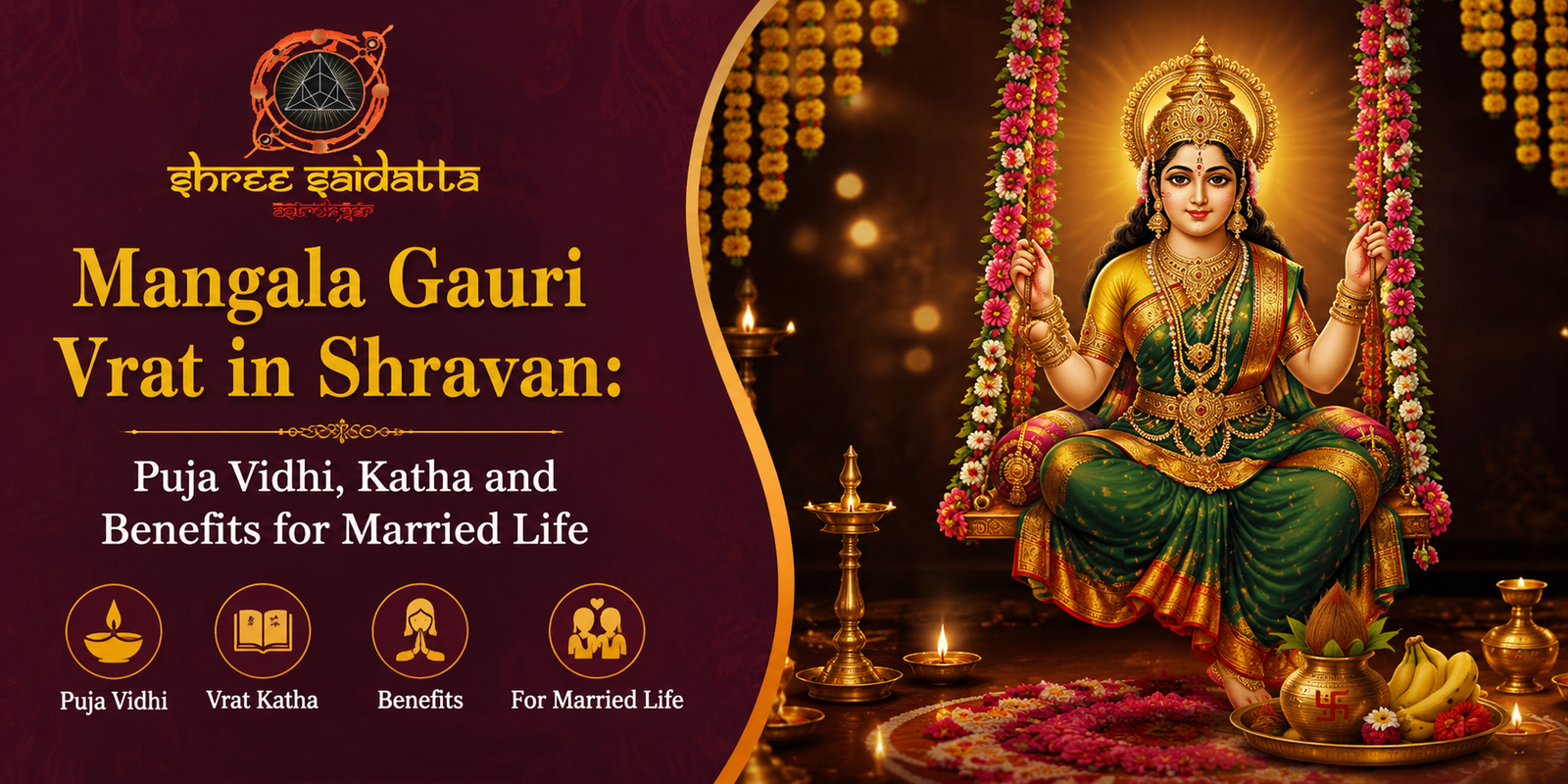
Mangala Gauri Vrat in Shravan: Puja Vidhi, Katha and Benefits for Married Life

Every Tuesday during the holy month of Shravan, homes across Maharashtra and the rest of India come alive with a quiet but powerful ritual — women dressed in red, a small altar glowing with a ghee lamp, and the soft recitation of an age-old katha. This is the Mangala Gauri Vrat, a sacred fast dedicated to Goddess Gauri (Devi Parvati), observed with deep faith for a happy, peaceful, and long-lasting married life.

Whether you’re newly married, planning your wedding, or simply curious about why this vrat holds such importance in Sawan, this guide covers everything — the puja vidhi, the katha, the real benefits, and the exact dates for 2026.


What Is Mangala Gauri Vrat?


Mangala Gauri Vrat is a fast observed on every Tuesday of Shravan, dedicated to seeking Goddess Gauri’s blessings for marital happiness, a spouse’s long life, and overall family harmony. Married women — especially those in their first five years of marriage — keep this fast for their husband’s health and longevity. Unmarried women also observe it, praying for a loving and compatible life partner.

Traditionally, the vrat is observed for five consecutive years after marriage, concluding with an Udyapan ceremony that marks the completion of the ritual cycle.


Mangala Gauri Vrat 2026 Dates


If you’re in Maharashtra or follow the Amanta calendar (as is common across Western and South India), here are this year’s dates:

  • First Vrat: August 18, 2026
  • Second Vrat: August 25, 2026
  • Third Vrat: September 1, 2026
  • Fourth Vrat: September 8, 2026

Each of these falls on a Tuesday during Shravan, the month considered most auspicious for worshipping Lord Shiva and Devi Parvati together.


Benefits of Mangala Gauri Vrat for Marriage and Married Life


This is where the vrat holds the most significance for women — and why it continues to be observed with such devotion generation after generation.


  1. Akhand Saubhagya (Unbroken Marital Fortune)
    Married women pray for an unbroken, prosperous married life, seeking protection from separation, misfortune, or hardship in the relationship.
  2. Marital Harmony
    The worship of Goddess Gauri is believed to strengthen emotional bonds between spouses — improving mutual understanding, communication, and peace at home. If you’re looking for practical happy married life tips beyond ritual, this emotional alignment is often the first thing astrologers recommend working on.
  3. Blessings for Unmarried Women
    Young, unmarried women observe the fast hoping for a devoted and compatible life partner — making it one of the most popular vrats among women preparing for marriage.
  4. Astrological Remedy for Manglik Dosha
    In Vedic astrology, Tuesday is ruled by Mars (Mangal). Keeping this fast is believed to pacify a weak or afflicted Mars in the horoscope, reducing the negative effects of Manglik Dosha. Many women pair this observance with a proper horoscope matching consultation for deeper clarity — the spiritual practice alongside the astrological one — especially when marriage compatibility astrology is a concern before finalizing a match.
  5. Household Prosperity
    Beyond the marital angle, the vrat is also linked to overall family well-being — inviting positive energy, harmony, and financial stability into the household.


Mangala Gauri Vrat Puja Vidhi


The rituals are simple but deeply symbolic. Here’s how the puja is traditionally performed:

  1. Morning Preparation: Devotees bathe early, wear clean (often red) clothes, and set up a purified worship space at home.
  2. Deity Installation: An idol or symbol of Goddess Gauri (sometimes represented as Goddess Annapurna) is placed alongside Lord Shiva.
  3. Offerings: A red chunri, fresh flowers, turmeric, kumkum, sweets, and the sixteen traditional bridal adornments — known as solah shringar — are offered to the Goddess.
  4. Katha Recitation: The Mangala Gauri Vrat katha is read aloud or listened to, narrating the story and significance behind the fast.
  5. Aarti: A ghee lamp, often with multiple wicks, is lit, and the aarti is performed with full devotion.
  6. Evening Meal: The fast — whether a strict fast or a fruit-based one — is broken only after the evening prayers are completed.


Solah Shringar Items List


Since the sixteen adornments are central to the puja, here’s what’s typically included: bangles (choodiyan), sindoor, bindi, mehendi, kajal, a nose ring (nath), earrings, a mangalsutra, anklets (payal), toe rings (bichhiya), a hair accessory, perfume (ittar), a red or auspicious-colored saree, flowers for the hair, kumkum, and a hand mirror. These items symbolically represent complete marital fortune and are offered to the Goddess as part of the ritual.


Mangala Gauri Vrat Katha


No Mangala Gauri Vrat is considered complete without listening to or reading the vrat katha. The story traditionally centers on the power of devotion and faith — narrating how sincere worship of Goddess Gauri brought marital happiness, protection, and prosperity to the devotee in the tale. Reciting this katha is believed to reinforce the intent behind the fast and deepen its spiritual benefit.


Regional Traditions: How It’s Celebrated in Maharashtra


In Maharashtra, Mangala Gauri Vrat carries a distinctly festive, community flavor. Evening gatherings often bring women together for traditional folk performances like fugdi and zimma — rhythmic group dances and games that add a joyful, social dimension to what is otherwise a solemn day of fasting. These celebrations are part of what makes Shravan such a vibrant month across Pune and the rest of the state.


Mantras for a Happy Married Life


Alongside the katha, many devotees also chant simple mantras to Goddess Gauri and Lord Shiva during the puja — invoking blessings for marital peace and their spouse’s wellbeing. If you’re unsure which mantra suits your specific horoscope or situation, it’s worth getting a professional reading rather than relying on generic online lists, since the right remedy often depends on individual planetary positions.


A Quick Note on Sawan Somwar Vrat


While Mangala Gauri Vrat falls on Tuesdays, many households in the same month also observe the Sawan Somwar Vrat — a separate fast kept on Mondays, dedicated specifically to Lord Shiva. The two vrats are often observed together across the same Shravan month, though they serve slightly different purposes and follow different rituals.


Why This Vrat Still Matters Today


In a time when most rituals compete for relevance against busy schedules, Mangala Gauri Vrat has held on — not just as tradition, but because it genuinely gives women a structured, faith-based way to invest emotional energy into their marriage. Whether or not you follow every ritual to the letter, the underlying intent — strengthening the marital bond and seeking wellbeing for your spouse — resonates across generations.


If you’ve recently gotten married or are planning to, you may also find it useful to read our detailed guide on kundali matching, which explains how compatibility is assessed even before the wedding takes place, giving you a fuller sense of what to expect in married life ahead.


Final Thoughts


Mangala Gauri Vrat is as much an emotional practice as a spiritual one — a dedicated space, once a week through Shravan, to focus entirely on your marriage and your spouse’s wellbeing. If you’d like personalized guidance on your horoscope, Manglik status, or marriage compatibility ahead of this Shravan, you can always get in touch with us for expert advice.

Frequently Asked Questions

Who should observe Mangala Gauri Vrat?

 Married women (especially in the first five years post-marriage) and unmarried women seeking a suitable life partner both observe this fast.

What are the Mangala Gauri Vrat 2026 dates in Maharashtra?

 August 18, 25, September 1, and September 8, 2026 — every Tuesday during Shravan.

Can Mangala Gauri Vrat help with Manglik Dosha?

 Yes, in Vedic astrology, this Tuesday fast is believed to pacify a weak or afflicted Mars, helping reduce the effects of Manglik Dosha.

What items are needed for the puja?

A red chunri, flowers, turmeric, kumkum, sweets, and the solah shringar items form the core offerings, along with an idol of Goddess Gauri and Lord Shiva.

How long is the vrat traditionally observed?

 It’s typically kept for five consecutive years after marriage, concluding with an Udyapan ceremony.

Is Mangala Gauri Vrat the same as Sawan Somwar Vrat?

 No — Mangala Gauri Vrat falls on Tuesdays and honors Goddess Gauri, while Sawan Somwar Vrat is observed on Mondays for Lord Shiva.

Read More

Nag Panchami 2026: Date, Puja Vidhi and Kaal Sarp Dosh Ke Upay

Every year, as the monsoon settles over Maharashtra and the rest of India, homes and temples come alive with the quiet devotion of Nag Panchami. It is one of those festivals that connects us directly to nature — snakes are not feared on this day, they are worshipped as living forms of the divine. For many families, Nag Panchami 2026 also carries a deeper personal significance, because this is the day astrologers most often recommend for anyone dealing with Kaal Sarp Dosh in their birth chart. If you have ever wondered why this dosh keeps coming up in your kundli readings, or what you’re supposed to actually do about it, this blog walks you through the date, the puja vidhi, and the specific kaal sarp dosh ke upay that work best on this sacred day.


Why Is Nag Panchami Celebrated?


Nag Panchami significance goes back thousands of years in Hindu tradition. According to scriptures, snakes (Nagas) are considered protectors of the earth’s hidden treasures and are closely associated with Lord Shiva, who wears the serpent Vasuki around his neck. The festival falls on the fifth day (Panchami) of the bright half (Shukla Paksha) of the month of Shravan, a month already considered highly auspicious for worship.

There are several popular versions of the nag panchami vrat katha passed down through generations. One widely told story speaks of a farmer who unknowingly killed baby snakes while ploughing his field. The grieving mother snake sought revenge, but was moved by the devotion of the farmer’s daughter, who worshipped the Naga deities with such sincerity that the snake blessed the family instead of harming them. This story is often narrated during the puja, and it explains why nag panchami is celebrated with such reverence in rural and urban households alike — it is a reminder to live in harmony with all creatures, especially ones we fear or misunderstand.


Nag Panchami 2026 Date and Shubh Muhurat


Nag Panchami 2026 date falls on Monday, 17th August 2026. The Panchami Tithi typically begins the previous evening and extends into the early hours of the festival day, so it’s important to check the exact muhurat before starting your puja. Traditionally, the best time to perform Nag Panchami puja is during the morning hours, ideally before noon, when the Panchami Tithi is active. Many families in Pune prefer to complete their rituals early, especially if they are also planning kaal sarp dosh nivaran puja on the same day, since certain remedial rituals are considered most effective during specific daytime muhurats.


Nag Panchami Puja Vidhi


The nag panchami puja vidhi is simple, but it should be followed with sincerity rather than haste. Here is the basic method followed in most Maharashtrian households:

  1. Wake up early and take a bath before sunrise. Wear clean clothes, preferably in a traditional color like yellow or red.
  2. Clean the puja area and draw or place an image of Naga Devta — either a painted image, a silver idol, or a clay figure.
  3. Offer milk, turmeric, kumkum, rice grains, and flowers to the Naga idol or image. In many homes, raw milk is offered near anthills or snake burrows as a mark of respect, though this practice is now discouraged by wildlife experts in favor of symbolic offerings at home.
  4. Light a diya and incense sticks, and recite the Nag Gayatri Mantra or simple prayers dedicated to Lord Shiva and the Naga deities.
  5. Read or listen to the nag panchami vrat katha with the family.
  6. Conclude with aarti and distribute prasad, ideally including something sweet like kheer or laddoo.

If you are unable to perform the full ritual at home, visiting a temple that hosts a proper nag panchami puja vidhi ceremony, or consulting an experienced astrologer for a guided puja, is equally acceptable.


What Is Kaal Sarp Dosh?


If you’ve been told you have kaal sarp dosh in your horoscope, you’re not alone — it’s one of the most searched and misunderstood doshas in Vedic astrology. So what is kaal sarp dosh kya hota hai, in simple terms? It occurs when all seven main planets in your birth chart are hemmed between Rahu and Ketu, the two lunar nodes. This planetary alignment is believed to create a kind of energetic blockage, making it harder for a person to experience smooth progress in career, relationships, health, or finances, even when their individual planetary strengths look promising.

Common kaal sarp dosh symptoms that people report include repeated delays in important life events like marriage or career growth, unexplained anxiety or restlessness, recurring obstacles despite hard work, and a general sense of being “stuck” in life. It’s worth noting that not every difficulty in life is caused by this dosh — a proper kundli analysis is necessary before assuming it applies to you. Since this condition forms specifically due to Rahu and Ketu’s placement, it is also closely tied to Ketu dosha remedies, which can offer additional relief alongside the Nag Panchami rituals.


Kaal Sarp Dosh Puja on Nag Panchami


This is where Nag Panchami becomes especially meaningful. Since Rahu and Ketu are directly linked to serpent energy in Vedic astrology, Nag Panchami is considered one of the most powerful days in the year to perform kaal sarp dosh puja. The day’s natural alignment with Naga worship makes remedial rituals more potent, according to traditional belief, which is why so many people specifically schedule their kaal sarp dosh nivaran puja to coincide with this festival rather than any random date.


Kaal Sarp Dosh Ke Upay for Nag Panchami


If you’re looking for kaal sarp dosh ke upay that align with this festival, here are the remedies most commonly recommended:

  • Offer milk and water to a Shivling, ideally early in the morning, along with chanting of the Mahamrityunjaya Mantra.
  • Feed snake charmers’ snakes symbolically through temple donations, since direct feeding is no longer encouraged.
  • Donate silver items shaped like snakes (Naag-Naagin) at a Shiva temple.
  • Recite the Rahu and Ketu beej mantras 108 times using a rudraksha mala.
  • Perform a proper kaal sarp dosh puja under the guidance of a qualified astrologer or priest, rather than attempting complex rituals without supervision.

Among general kaal sarp dosh remedies, these Nag Panchami-specific upay are considered to carry extra weight because the day itself is astrologically tied to serpent energy.


How Much Does Kaal Sarp Dosh Puja Cost?


One question we hear often is about kaal sarp dosh puja cost. Pricing genuinely varies depending on the type of puja (basic vs elaborate), the temple or astrologer conducting it, and whether it includes personalized mantra chanting or a full homam. Rather than choosing based on price alone, it’s worth consulting the best astrologer for a horoscope reading who can first confirm whether the dosh genuinely applies to your chart, and then recommend a puja that matches your specific planetary combination.


Final Thoughts


Nag Panchami is far more than a ritual of offering milk to snake idols — it’s a day rooted in respect for nature and, for many, a genuine opportunity to address deep-rooted astrological blocks like kaal sarp dosh. Whether you’re performing the puja at home following traditional vidhi, or planning a dedicated kaal sarp dosh nivaran puja this year, doing it with the right knowledge and guidance makes all the difference. If you’re unsure whether kaal sarp dosh is affecting your life, you can book a detailed kundli consultation to clear up exactly what’s going on and which remedies will genuinely help you.

Frequently Asked Questions

What is the Nag Panchami 2026 date?

 Nag Panchami 2026 date falls on Monday, 17th August 2026, during the Shukla Paksha of Shravan month.

Is Nag Panchami the best day to perform Kaal Sarp Dosh puja?

Yes, since Rahu and Ketu are closely associated with serpent energy, Nag Panchami is considered one of the most favorable days in the year for kaal sarp dosh puja and kaal sarp dosh nivaran puja.

What are the common kaal sarp dosh symptoms to watch for?

 Frequently reported kaal sarp dosh symptoms include repeated delays in marriage or career, unexplained anxiety, recurring obstacles despite consistent effort, and a persistent feeling of being stuck in life.

How much does kaal sarp dosh puja cost?

Kaal sarp dosh puja cost varies based on the type of puja, whether it includes a homam, and who is conducting it. It’s best to consult an astrologer directly for accurate pricing based on your specific chart.

What are some simple kaal sarp dosh ke upay I can do at home?

Simple kaal sarp dosh ke upay include offering milk and water to a Shivling, chanting Rahu-Ketu beej mantras with a rudraksha mala, and donating silver Naag-Naagin idols at a Shiva temple, ideally on Nag Panchami itself.

Read More

Sawan 2026: Shravan Month Dates, Somvar Vrat Katha & Puja Vidhi

Shravan, also known as Sawan, is one of the most sacred months in the Hindu calendar and is devoted entirely to Lord Shiva. Every year, millions of devotees observe Somvar (Monday) fasts during this month, believing that Lord Shiva blesses sincere devotees with health, peace, and prosperity. If you have been searching for Sawan 2026 dates, Shravan Somvar Vrat Katha, or the correct puja vidhi to follow, this guide covers everything you need to know.


When Does Shravan Month 2026 Start and End?


One common source of confusion every year is that Shravan dates differ depending on which part of India you live in. This happens because North India follows the Purnimanta calendar, while Maharashtra and most of western and southern India follow the Amanta calendar.

Maharashtra & South India (Amanta calendar): Shravan Maas 2026 runs from August 13 to September 11, 2026.

North India (Purnimanta calendar): Shravan Month 2026 runs from July 30 to August 28, 2026.

If you live in Pune, Mumbai, or anywhere else in Maharashtra, the Amanta calendar dates above are the ones relevant to you. This is also why searches for “Shravan Somvar 2026 Maharashtra” often show different dates compared to searches from Delhi or Uttar Pradesh — both are correct, just based on different regional calendars.


Shravan Somvar Vrat Dates 2026 (Maharashtra Calendar)


For devotees in Maharashtra and western India, the four Somvar Vrat dates to mark on your calendar this year are:

  • 1st Somvar Vrat: Monday, August 17, 2026 (this also coincides with Nag Panchami)
  • 2nd Somvar Vrat: Monday, August 24, 2026
  • 3rd Somvar Vrat: Monday, August 31, 2026
  • 4th Somvar Vrat: Monday, September 7, 2026

Many devotees consider the first Somvar Vrat especially important, as it sets the tone for the entire month of devotion. Since it falls on Nag Panchami this year, it is considered an even more auspicious day to begin your Shravan fasting and Shiv Puja.


The Legend Behind Shravan Somvar Vrat Katha


Every ritual in Hindu tradition carries a story, and the Shravan Somvar Vrat is no exception. The most widely told Vrat Katha describes a wealthy merchant who lived in a prosperous city but remained deeply unhappy because he had no children. Despite his wealth, he felt his life was incomplete.

Out of devotion and desperation, the merchant turned to Lord Shiva with unwavering faith, observing the Somvar fast with complete sincerity. Moved by his devotion, Lord Shiva and Goddess Parvati blessed him with a son. However, there was a condition — the child was destined to have a very short life.

As the story unfolds, it is the boy’s mother who ultimately changes his fate. Through her continued faith, strict observance of the Monday fast, and unwavering devotion to Lord Shiva even after the child’s birth, she is able to extend her son’s life. The katha is usually read aloud in the evening, just before devotees break their fast, as a reminder of the power of sincere devotion.

The core message of this story is simple yet powerful: those who observe the Shravan Somvar Vrat with a pure heart and true faith are blessed with good health, wealth, and freedom from life’s sorrows — no matter how difficult their circumstances may seem.


Shravan Somvar Puja Vidhi: Step-by-Step Rituals


If you are observing the Somvar Vrat this Shravan, following the correct puja vidhi is considered essential for the fast to be effective. Here is the traditional method followed by most devotees:

  1. Wake up early and purify your space. Rise before sunrise, take a bath, and clean your home and puja area thoroughly. Wearing clean clothes, preferably in white or light colors, is considered auspicious for Shiv Puja.
  2. Visit a Shiva temple. While home puja is acceptable, visiting a Shiva temple on Somvar is considered especially beneficial during Shravan.
  3. Perform Abhishek on the Shivling. This is the central ritual of the day. Devotees pour clean water, milk, honey, and curd over the Shivling one after another, each representing purity, nourishment, sweetness, and prosperity.
  4. Offer Bel Patra and other items. Bilva (bel patra) leaves are considered extremely dear to Lord Shiva and are offered along with white flowers and sandalwood paste (chandan). Many devotees also offer dhatura and akand flowers, which are traditionally associated with Shiva worship.
  5. Chant the sacred mantras. Throughout the day, devotees recite the Panchakshari mantra “Om Namah Shivaya” or the Mahamrityunjaya Mantra. These mantras are believed to bring peace of mind, remove obstacles, and protect against untimely difficulties.
  6. Read or listen to the Vrat Katha. In the evening, before breaking the fast, the Somvar Vrat Katha is read or narrated to reaffirm faith and understand the significance of the day’s observance.
  7. Break the fast with satvik food. The fast is typically broken with simple, sattvic meals — often fruits, milk-based dishes, or foods made without onion and garlic — after the evening puja is complete.


Fasting Rules to Keep in Mind


While rules can vary slightly by family tradition, most devotees follow these general fasting guidelines during Shravan Somvar:

  • Avoid grains, non-vegetarian food, onion, and garlic through the day.
  • Many devotees consume only fruits, milk, or a single satvik meal in the evening.
  • Water and milk are permitted throughout the fast for most people.
  • Those with health conditions, pregnant women, and elderly individuals are advised to modify the fast according to their doctor’s or family astrologer’s guidance rather than following it strictly.


Why Shravan Month Holds Such Deep Importance


Shravan is regarded as Lord Shiva’s most beloved month according to Hindu tradition, which is why the entire period — not just Mondays — is considered spiritually significant. Devotees often use this month to start new spiritual practices, perform Vastu and puja-related remedies for their homes, and seek astrological guidance for ongoing personal or family challenges. Since Shravan Somvar coincides with a period of heightened devotional energy, many people also choose this month to consult an astrologer for marriage compatibility, career decisions, or remedies related to health and finance.


Final Thoughts


Whether you are observing the Somvar Vrat for the first time or have followed this tradition for years, Shravan Month 2026 offers a meaningful opportunity to reconnect with faith, discipline, and devotion to Lord Shiva. If you would like personalized guidance on which remedies, pujas, or fasting practices are best suited to your horoscope this Shravan, feel free to book a consultation with Pandit Pravin Shastri at Shree Saidatta Jyotish, Pune’s trusted name in Vedic astrology for over 25 years.

Frequently Asked Questions

When is Shravan 2026 in Maharashtra?

Shravan 2026 in Maharashtra begins on August 13 and ends on September 11, 2026, following the Amanta calendar.

How many Somvar Vrats are there in Shravan 2026?

There are four Somvar Vrats in Maharashtra this year, falling on August 17, August 24, August 31, and September 7, 2026.

Which is the most important Somvar of Shravan?

The first Somvar is considered particularly significant, and in 2026 it holds extra importance as it coincides with Nag Panchami on August 17.

Can I do the Shravan Somvar Vrat without a full day fast?

Yes. Many devotees observe a modified fast, eating fruits or a single satvik meal, especially if health does not permit a strict fast. The devotion and puja matter more than the strictness of the fasting itself.

What should I offer Lord Shiva during Shravan Somvar Puja?

The most important offerings are bel patra (bilva leaves), clean water, milk, honey, curd, white flowers, and sandalwood paste during the Abhishek. These offerings are believed to please Lord Shiva and bring peace, prosperity, and the fulfillment of sincere wishes.

Read More

The Full Moon of the Guru: Finding Light and Wisdom on Guru Purnima

The Full Moon of the Guru: Finding Light and Wisdom on Guru Purnima


We live in an age of unprecedented information. At the tap of a screen, we can access endless data, tutorials, and intellectual philosophies. Yet, despite being the most informed generation in human history, genuine clarity, inner peace, and life-anchoring wisdom often feel scarce. Information tells us how to function, but a guide helps us understand who we are.

This timeless distinction is at the heart of Guru Purnima, a sacred festival dedicated to honoring the spiritual, intellectual, and academic teachers who guide us from the confusion of ignorance into the clarity of wisdom. Whether you are wondering what is Guru Purnima or exploring its rich heritage, this day serves as a collective pause button to look back with gratitude at the hands that helped shape our path.


When Is Guru Purnima 2026?


Timing plays a significant role in traditional observances. Guru Purnima 2026 is celebrated on Wednesday, July 29, 2026.

  • Purnima Tithi Begins: 6:18 PM on Tuesday, July 28, 2026
  • Purnima Tithi Ends: 8:05 PM on Wednesday, July 29, 2026

Marking the full moon (Purnima) in the Hindu month of Ashadha—frequently referred to in traditional calendars as Ashadha Purnima—this date is sacred across various traditions for pausing to honor our spiritual lineage.


What Does “Guru” Truly Mean?


To understand the festival, we must look at the etymology of the word itself. When exploring the Guru Purnima meaning or the deeper meaning of Guru Purnima, the term Guru is a compound of two Sanskrit roots:

  • Gu: Translates to darkness or spiritual ignorance.
  • Ru: Translates to the dispeller, or the light that destroys that darkness.

A Guru, therefore, is not merely a lecturer imparting textbook knowledge, nor is it someone who simply fills your head with facts. A true guide acts as a catalyst. They do not shine an external spotlight into your eyes; rather, they help awaken your own inner light, teaching you how to navigate life’s complexities with grace, resilience, and discernment. 


Historical Roots and Mythological Significance


Why do we celebrate Guru Purnima history with such reverence? The festival is deeply layered with historical, cultural, and spiritual milestones that stretch back millennia:

  1. The Birthday of Maharishi Ved Vyasa (Vyasa Purnima): Traditionally, the day is celebrated as the birth anniversary of the legendary sage Maharishi Ved Vyasa. Vyasa is a monumental figure in Vedic literature—he is credited with compiling the four Vedas, authoring the epic Mahabharata, writing the Puranas, and setting down the Srimad Bhagavatam. Because he organized and distributed human knowledge so it could survive through generations, all spiritual and academic teachers are honored as representatives of his lineage on this day.
  2. Lord Shiva as the Adiyogi: In the yogic tradition, the concept of the Lord Shiva Adiyogi marks the day Lord Shiva transformed into the first Guru. It was on this full moon that he began transmitting the profound sciences of yoga and self-resiliency to the Saptarishis (the seven ancient sages), laying the foundation for human spiritual evolution.
  3. Cross-Tradition Reverence: While deeply rooted in Vedic and Hindu heritage, the spirit of honoring the teacher extends outward. In Buddhism, this day commemorates when Lord Buddha gave his very first sermon at Sarnath, setting the Wheel of Dharma into motion. Across various traditions, it remains a universal day of acknowledgment for spiritual masters.


Traditional Rituals and Puja Vidhi


For centuries, practitioners, students, and seekers have marked Guru Purnima celebration through structured, mindful observances designed to realign their focus:

  • Morning Cleanliness and Attire: Devotees typically wake up early, take a purifying bath, and wear clean clothes—often choosing yellow, a color symbolizing knowledge, auspiciousness, and spiritual expansion.
  • Guru Purnima Puja: Special altars or spaces are set up featuring images of Sage Vyasa, lineage masters, or personal mentors. Offerings of fresh flowers, fruits, sweets, and incense are presented as tokens of respect during the Guru Purnima puja.
  • Mantra Chanting and Study: Many spend the day reciting texts like the Guru Gita or seeking powerful guru blessings. Understanding specific Guru Gayatri mantra benefits or reciting a traditional guru mantra helps center the mind in deep appreciation.


Powerful Mantras, Shlokas, and Vandana for Guru Purnima


To deepen your observance of Guru Purnima rituals, incorporating traditional shlokas, a sacred guru shloka, or a heartfelt guru vandana can help channel sincere gratitude.


1. The Universal Guru Vandana


Gurur Brahma Gurur Vishnu Gurur Devo Maheshwaraha

Gurur Sakshat Param Brahma Tasmai Sri Gurave Namaha

  • Meaning: The Guru is Brahma (the creator), the Guru is Vishnu (the preserver), and the Guru is Shiva (the destroyer/transformer). The Guru is truly the supreme, formless Brahman. Salutations to that holy Guru.


2. The Light of Knowledge Shloka


Ajnana-timirandhasya jnananjana-shalakaya

Chakshun unmilitam yena tasmai shri gurave namaha

  • Meaning: Salutations to that holy Guru, who opened my eyes—blinded by the darkness of ignorance—with the collyrium of divine knowledge.


Modern Relevance: Who Is Your Guru Today?


It is easy to assume that observing Guru Purnima festival requires following an ascetic in a distant monastery. However, in the context of modern life, the “Guru principle” manifests in many forms.

Why do we celebrate Guru Purnima today? Because mentorship surrounds us:

  • Parents: Your first teachers, who instilled basic moral compass points and taught you how to walk through the world.
  • Academic and Creative Mentors: School teachers, professors, or coaches who recognized your potential before you saw it yourself.
  • Life Anchors: Friends, managers, or partners who offered honest feedback, pulled you out of personal blind spots, or stood by you during seasons of heavy transition.

If you are seeking personalized astrological guidance or spiritual alignment to better understand your path and chart your growth with a mentor, you can connect with the best astrologer in pune.


Conclusion: Pausing to Say Thank You


In a fast-paced world that constantly demands our next achievement, Guru Purnima day asks us to stop running and look backward with a heart full of appreciation. Wisdom does not happen in a vacuum; it is passed down through a chain of human care, patience, and shared experience.

Take a quiet moment to reflect on the teachers, guides, and mentors who have illuminated your path. A simple phone call, a heartfelt message, or even a moment of silent mental gratitude can bridge the distance, honoring the enduring truth that none of us walks alone. For consultations, spiritual inquiries, or to book a session, reach out to jyotish in pune.

Read More

Shani Sade Sati: Is It Bad Luck or Good Luck?

Say the words “Shani Sade Sati” out loud in most Indian households, and watch faces change. Someone will lower their voice. Someone else will mention an uncle who lost his job, or a cousin whose marriage got delayed for no clear reason. It has a reputation, and not a friendly one.

But here’s the thing — Shani Dev isn’t out to punish you. Think of him less as a villain and more as the strictest teacher you ever had: the one who never let you skip homework, but whose class you remember most fondly years later, because he made you disciplined. That’s really the sade sati meaning in one line — a stretch of time where life asks you to grow up, whether you’re ready or not.

If you’re trying to understand shani ki sade sati kis rashi par hai right now, or just want a clear, no-nonsense explanation without the fear-mongering, this guide covers it all — the meaning, the phases, who’s affected in 2026, and the remedies that actually help.


What Is Shani Sade Sati? (Sade Sati Meaning Explained)


Let’s start simple. What sade sati means is right there in the name:

  • Sade = half
  • Sati = seven

Put together — seven and a half years. That’s how long Saturn takes to transit through three consecutive zodiac signs: the sign before your Moon sign, your Moon sign itself, and the sign right after it. Saturn spends roughly 2.5 years in each, and 2.5 × 3 = 7.5 years of what astrologers call Sade Sati.

It’s one of the most talked-about concepts in Vedic astrology, and for good reason — almost everyone goes through it two or three times in their life. It isn’t rare or unusual. It’s simply a cycle, the same way seasons change.


Shani Dhaiya: The Shorter Cousin of Sade Sati


While we’re clearing up meanings, it’s worth explaining shani dhaiya means something different, though people often confuse the two. Dhaiya (also called panoti, or in its milder form, small panoti) happens when Saturn transits the 4th or 8th house from your Moon sign — a shorter, roughly 2.5-year period. So if someone asks what is small panoti, this is it: a scaled-down version of Saturn’s influence, less intense than full Sade Sati but still worth paying attention to.


Is Sade Sati Good or Bad? What Actually Happens


Here’s a fair, honest answer to a question we hear constantly: is sade sati always bad? No — but it isn’t a free pass either. It’s demanding.

So what does shani ki sade sati me kya hota hai in real, everyday terms? Based on what most people experience:

  • Money moves differently. Expenses show up when you least expect them, or income feels slower than the effort you’re putting in.
  • Relationships get tested. People who were never truly invested in you tend to drift away. The ones who stay are usually the ones who matter.
  • Work feels heavier. Either you’re pushed toward a change you weren’t planning, or you feel stuck despite working harder than usual.
  • Mentally, it’s a lot. Overthinking, self-doubt, and a general sense of “why is everything so difficult right now” are common.

This is the honest effect of sade sati — it’s a period of real-life struggle, but one with a purpose. Saturn doesn’t take things away for no reason; he removes what wasn’t serving you, so that what remains is stronger. People who come out the other side of Sade Sati are usually more grounded, more patient, and far less rattled by small setbacks than they were before.


The Three Phases of Sade Sati


Not every year of this 7.5-year period feels the same. It breaks down into three distinct sade sati phase stages:

  1. Rising Phase (First 2.5 years) Saturn enters the sign just before your Moon sign. This phase mostly affects finances and general stability — think unexpected expenses, minor health niggles, and a low hum of restlessness.
  2. Peak Phase (Middle 2.5 years) Saturn now sits directly on your Moon sign. This is the toughest stretch — it presses on your mind and emotions the most. Confidence dips, decisions feel harder, but this is also where the biggest personal lessons happen.
  3. Setting Phase (Final 2.5 years) Saturn moves into the sign after your Moon sign. The pressure eases noticeably. This is when the hard work of the earlier phases starts paying off — often in ways you didn’t expect.

If you’re wondering which phase of sade sati is worse for Kumbh rashi (Aquarius) specifically — for Aquarius natives, the peak phase (when it occurred) is typically remembered as the hardest, though by 2026 Aquarius has already moved past that stage (more on this below).


Shani Sade Sati in 2026: Who’s Affected Right Now


This is the part people actually search for — shani sade sati now on which rashi, and specifically, shani sade sati in 2026.

Saturn entered Pisces (Meen Rashi) in March 2025 and continues its transit through shani sade sati pisces territory through 2026, remaining in this sign until roughly mid-2027. That placement determines exactly three Moon signs currently under Sade Sati:

  • Aries (Mesh Rashi): This is where mesh rashi shani sade sati begins — the Rising Phase. If you’re asking when did mesh rashi sade sati start, it’s the most recent of the three to enter the cycle, and the mesh rashi sade sati period right now centers on financial caution and adjusting to new responsibilities.
  • Pisces (Meen Rashi): Right in the middle — the Peak Phase. This is the most intense window, calling for patience, emotional steadiness, and attention to health.
  • Aquarius (Kumbh Rashi): In the Setting Phase, the final stretch. The hardest part is behind them, and 2026 is largely about seeing the results of years of effort.

Saturn also turns retrograde for part of 2026, which many astrologers note as a good window to slow down and focus on inner remedies rather than pushing hard on new ventures.

Worth remembering: Saturn’s sign changes every 2.5 years or so, which means the specific rashis under Sade Sati will shift again once it moves past Pisces. If you want to know exactly where you personally stand — not just which rashi is affected generally — the most reliable way is to run a sade sati calculator by date of birth using your exact birth details, since Moon sign placement (not Sun sign) is what determines this for you.


Shani Sade Sati Remedies (Sade Sati Upay That Actually Help)


If you’re currently in any phase of Sade Sati, the good news is that traditional shani sade sati upay are simple, low-cost, and genuinely effective when followed with consistency — not expensive rituals, just steady devotion.

  1. Recite the Hanuman Chalisa This is considered the single most powerful of all remedies for sade sati. Shani Dev is said to never trouble a sincere devotee of Hanuman ji.
  2. Saturday Charity Saturn responds well to generosity. Donating black sesame seeds, black clothing, iron items, or mustard oil on Saturdays is a widely followed shani sade sati remedy. Helping the elderly, the poor, or the differently-abled is considered especially auspicious during this period.
  3. Lifestyle Discipline This is the remedy people forget about. Waking up on time, being honest in your work, and avoiding non-veg food and alcohol on Saturdays go a long way — Saturn rewards discipline more than any ritual.
  4. Chaya Daan (Shadow Donation) Look at your reflection in a bowl of mustard oil, then donate that oil to a temple or someone in need. It’s a traditional practice believed to remove negative energy tied to Saturn’s influence.
  5. Protective Mantras Alongside the Hanuman Chalisa, several other mantras are traditionally used to build a protective shield during this period. If you want a fuller list beyond just the Shani-specific ones, our guide on 7 powerful mantras to protect yourself from negative energy covers additional options worth adding to your routine.


It’s also worth knowing that Sade Sati isn’t the only Saturn-related affliction people deal with — if remedies for Sade Sati don’t fully resolve your struggles, it may be worth checking for Ketu Dosha as well, since the two are sometimes present together in a chart. Our detailed post on Ketu Dosha remedies walks through the signs and fixes.


Don’t Guess — Check Your Actual Chart


A blog can explain the general rules, but Sade Sati plays out differently for every birth chart depending on planetary placements, current Mahadasha, and other transits happening alongside Saturn. If you’re unsure whether you’re currently affected, which phase you’re in, or which remedies suit your specific chart, it’s worth getting a proper detailed horoscope reading rather than relying on general rashi predictions.

Along similar lines, if delays or obstacles in marriage have been part of your Sade Sati experience, our detailed guide on Mangal Dosha meaning and remedies for a happy marriage is worth reading — Saturn’s influence and Mangal Dosha are often discussed together in marriage-related consultations.

Sade Sati isn’t a curse — it’s a training ground. It strips away what isn’t essential so you can rebuild on steadier ground. If you’d like clarity on your own chart and a remedy plan tailored to you, get in touch with us and we’ll walk you through it, phase by phase.


Frequently Asked Questions

Is Sade Sati always bad?

No. It’s a demanding period, not a cursed one. It tends to remove what isn’t serving you — weak relationships, bad habits, misplaced priorities — so that what’s left is stronger. Many people report their biggest career or personal breakthroughs happened during or right after their Sade Sati.

How long does Shani Sade Sati last?

The full cycle runs 7.5 years, split into three phases of roughly 2.5 years each — Rising, Peak, and Setting. Most people go through this cycle two to three times in their lifetime.

What's the difference between Sade Sati and Shani Dhaiya (panoti)?

 Sade Sati covers three signs around your Moon sign over 7.5 years. Dhaiya, also called panoti or small panoti, is shorter — about 2.5 years — and happens when Saturn transits the 4th or 8th house from your Moon sign. Dhaiya is generally considered less intense than Sade Sati.

Which phase of Sade Sati is the toughest?

The middle phase — the Peak Phase, when Saturn sits directly on your Moon sign — is usually considered the most challenging, especially mentally and emotionally. The Rising and Setting phases tend to be comparatively easier to manage.

How can I check my Sade Sati by date of birth?

You’ll need your exact Moon sign, which is calculated from your birth date, time, and place — not your Sun sign. A sade sati calculator using accurate birth details will tell you your current phase, or you can get a personalised horoscope reading for full accuracy.

Read More